

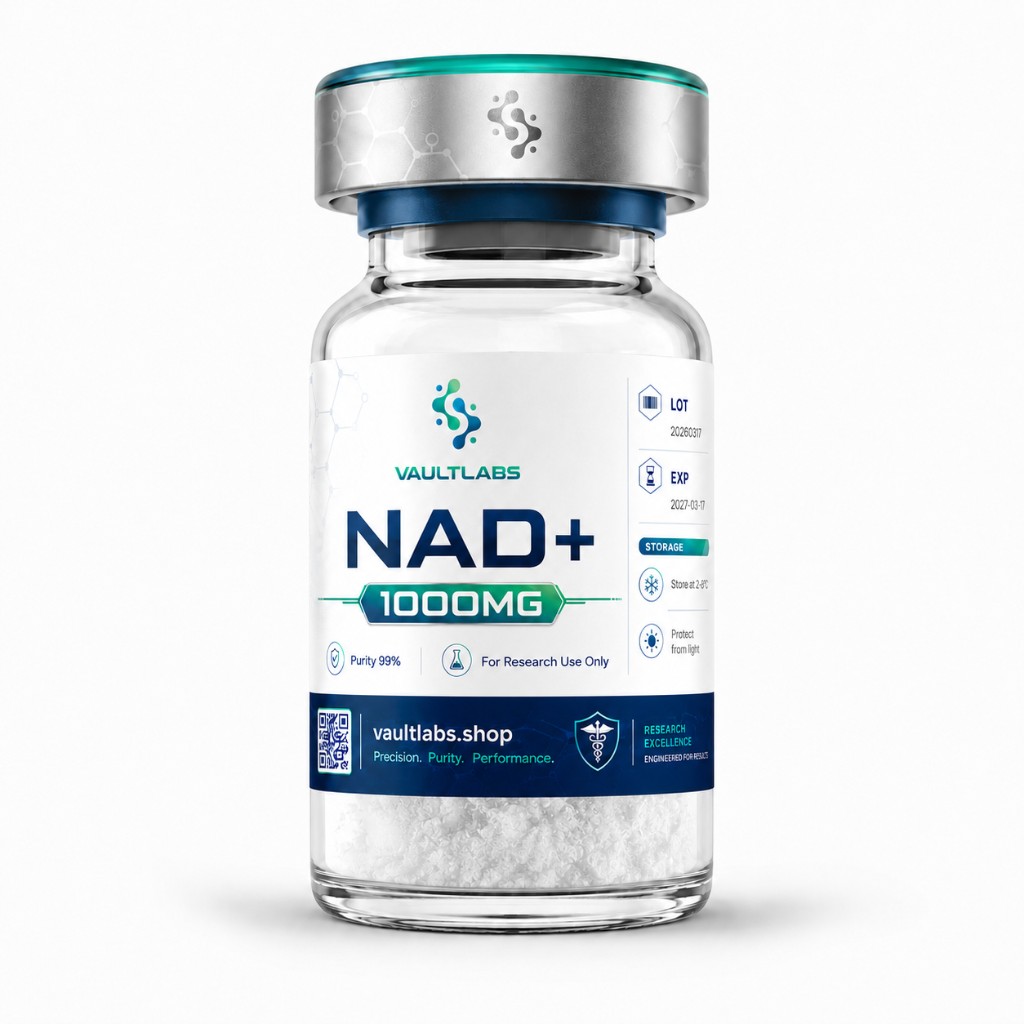
NAD+ 1000mg is the largest single fill in the VaultLabs catalogue, and that one number should change how your laboratory receives it. Everything on the peptide shelf arrives between 100 mcg and 30 mg. This vial arrives at a gram. It is also not a peptide — NAD+ is a dinucleotide coenzyme with CAS registry number 53-84-9, molecular formula C21H27N7O14P2 and molecular weight 663.43 g/mol — so several habits your receiving officers built around peptide vials do not transfer. Identity facts sit on the NAD+ compound monograph; this page covers the receiving, aliquoting, and record-keeping consequences of a bulk fill.
Why the 1000 mg fill changes the receiving workflow
A gram vial is a source for preparing many working stocks, not a single-experiment aliquot. That makes the sub-aliquoting plan a receiving artefact rather than a bench decision: it should exist in writing before anybody breaks the seal.
Decide in advance who opens the vial, into what containers, under what conditions, and how each daughter container inherits the parent lot identifier. The failure mode here is specific and common — a bulk vial is opened opportunistically for one experiment, aliquots are filled into unlabelled tubes, and within a month the laboratory holds material it cannot link to a certificate. The certificate is still on file and it has become worthless.
There is a second arithmetic trap. A 1000 mg fill sits an order of magnitude above the peptide vials on the same shelf. Anyone who assumes the fill weight from habit rather than reading it will be wrong by a factor of ten in the stock-solution calculation, and the error is silent.
Moisture is the handling variable that matters
NAD+ is markedly hygroscopic and the pyrophosphate linkage is susceptible to hydrolysis. For a peptide, degradation conversation usually centres on freeze-thaw cycling and side-chain chemistry. Here the dominant concern is water, which means open-vial time and the ambient humidity of the room where the vial is opened are the variables to control.
Practical consequence for receiving: do not open a gram vial to inspect the contents. Visual confirmation is done through the glass — appearance is a white to cream lyophilised powder. General handling conventions are set out in laboratory handling basics.
What the certificate looks like when there is no sequence field
This is where trained peptide receiving officers reliably raise a false discrepancy. A peptide certificate carries a sequence or identity line; an NAD+ certificate does not, because there is no sequence to state. Somebody checking for that field will read its absence as a missing field rather than as the wrong expectation.
Brief your team on that difference once. And do not compare an NAD+ purity figure against a peptide purity figure as though they sit on one scale — different compound classes, different methods, different conventions. Vial-level specification detail for this presentation is covered in NAD+ research vial specifications.
VaultLabs publishes per-lot COA records in the batch portal once uploaded. Enter the lot through batch verification at the point of receipt, and hold the vial where no published record exists yet.
Do not inventory NAD+ on a peptide row
Filing NAD+ into the peptide workflow because both materials arrive lyophilised is the mistake this page exists to prevent. Different chemical class, different certificate structure, different failure modes, different fill scale. It needs its own inventory row with its own storage line and its own aliquot register.
Synonyms make this harder than it should be. NAD, NAD+, diphosphopyridine nucleotide, and coenzyme I all appear on requisitions, and related-but-distinct materials from the same literature — precursors and reduced forms — get absorbed into the same row because the names look adjacent. Write one crosswalk row per material and keep it where purchasing can see it.
UAE receiving specifics
Pricing and checkout are in AED, and dispatch covers the seven emirates. Move the parcel out of ambient conditions before you open the documentation; cold-chain context for summer receiving is set out on cold-chain research supplies UAE.
Commercial and dispatch questions for this material belong on NAD+ research UAE, and emirate-level documentation notes on the NAD research UAE guide. This article is deliberately narrow: receiving, aliquot discipline, and the lot record.
FAQ
Why does NAD+ need a different receiving process from our peptide SKUs?
Because it is a different chemical class at a much larger fill. Moisture control replaces freeze-thaw as the dominant handling concern, the certificate omits a sequence field by design, and the gram-scale fill invites an order-of-magnitude arithmetic error if the number is assumed rather than read.
Should the aliquoting plan be written before the vial arrives?
Yes. A gram vial will be split, and the split is where lot traceability is lost. Agreeing the container scheme and the lot-labelling rule in advance costs nothing and prevents unattributable material later.
Is a missing sequence line on the certificate a discrepancy?
No. NAD+ has no sequence, so the field does not apply. Check the registry identity, the analytical methods named, the lot identifier, and the date instead.
Can NAD+ share an inventory row with a peptide of similar appearance?
It should not. A shared row makes one certificate appear to cover two materials, which is the specific documentation gap an auditor looks for.
NAD+ supplied by VaultLabs is for in vitro laboratory research only.